

- Sc-Cleaning
A Practical Home Cleaning Checklist for Busy Families in Orlando
Keeping a home clean can be challenging when work, school, activities, and family responsibilities fill most of the day. For many families, finding enough time to complete every household chore often feels just as difficult as the cleaning itself. Having a simple plan makes it easier to stay organized without feeling overwhelmed.
A practical cleaning checklist helps break larger tasks into smaller, more manageable steps that fit into a busy schedule. Instead of trying to clean the entire house at once, families can focus on the areas that need the most attention and build consistent habits over time.
This home cleaning checklist is designed to help busy families in Orlando maintain a cleaner, more comfortable home while making the best use of the time they have available.
1. Start by Prioritizing the Most Used Areas of Your Home

Not every room requires the same amount of attention each day. For busy families in Orlando, focusing on the spaces that experience the most daily activity helps keep the home looking cleaner while making the best use of limited cleaning time. Starting with the busiest areas also prevents dirt and clutter from spreading throughout the house.
Giving priority to these spaces creates a noticeable improvement without requiring hours of cleaning. Once the main living areas are under control, it becomes easier to maintain the rest of the home through smaller routine tasks.
Focus on high-traffic rooms first
Begin with areas such as the kitchen, living room, entryway, and frequently used hallways. These spaces are used throughout the day and tend to collect dust, crumbs, shoes, bags, and other everyday clutter more quickly than less-occupied rooms.
Spending a few minutes cleaning these rooms each day helps maintain a tidy appearance and reduces the amount of work needed during weekly cleaning sessions.
Clean the areas your family uses every day
Frequently touched surfaces such as kitchen counters, dining tables, bathroom sinks, light switches, and door handles should be cleaned regularly as part of the daily routine. These areas accumulate dirt more quickly because they are used repeatedly throughout the day.
Keeping these surfaces clean improves the overall appearance of the home and helps create a more comfortable environment for everyone in the household.
2. Create a Simple Daily Cleaning Routine
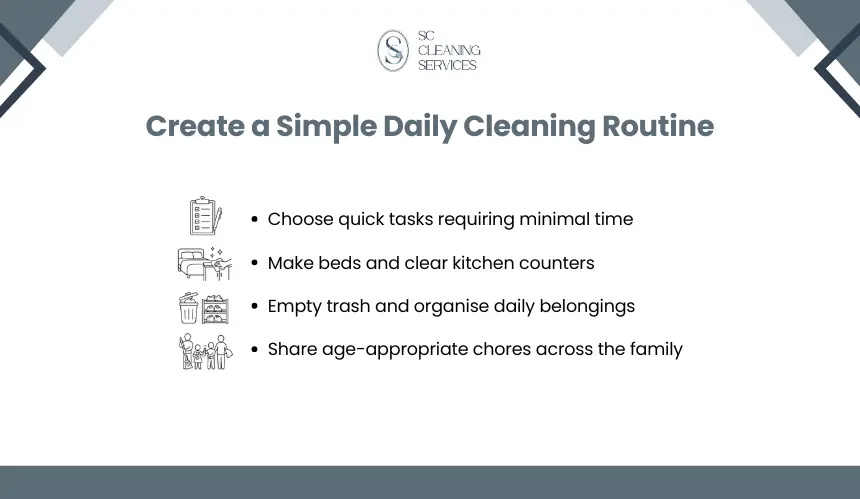
A daily routine does not need to include every household chore to be effective. For busy families, a short list of consistent tasks is often easier to maintain than setting aside several hours for cleaning at the end of the week. Small daily efforts can prevent dirt and clutter from becoming overwhelming.
Keeping the routine realistic also makes it more likely that everyone in the household will follow it. A manageable schedule creates lasting habits and reduces the amount of time needed for larger cleaning sessions.
Choose tasks that take only a few minutes
Focus on quick tasks such as making the beds, loading the dishwasher, wiping kitchen counters, putting away shoes, and emptying trash bins when needed. Completing these jobs each day keeps the home looking organized without requiring a significant time commitment.
Choosing simple tasks also makes it easier to fit cleaning into busy mornings or evenings. Even a few minutes of daily maintenance can make a noticeable difference throughout the week.
Involve the whole family when possible
Cleaning becomes more manageable when responsibilities are shared among family members. Assigning age-appropriate tasks allows everyone to contribute while reducing the workload for one person.
Simple responsibilities such as putting toys away, organizing personal belongings, or helping clear the dining table encourage good habits and make daily cleaning feel like a shared effort instead of an individual responsibility.
3. Set Aside Time for Weekly Deep Cleaning

Daily cleaning helps control surface-level dirt, but some areas of the home need more attention than a quick routine can provide. Setting aside time once a week for deeper cleaning prevents grime from building up and keeps the home in better condition over time. Breaking these tasks into manageable sessions makes them easier to complete.
A weekly schedule also helps ensure that important cleaning jobs are not forgotten. Instead of trying to deep-clean the entire house in one day, focusing on specific areas each week makes the process more practical for busy families.
Rotate one area of the home each week
Choose one part of the house to receive extra attention each week, such as bedrooms, the living room, laundry room, or entryway. Rotating responsibilities allows every area to receive regular care without making any single cleaning session feel overwhelming.
This approach also makes it easier to maintain consistency throughout the month. Small improvements made each week help keep the entire home cleaner with less effort.
Do not overlook kitchens and bathrooms
Kitchens and bathrooms usually require more frequent deep cleaning because they are exposed to moisture, food preparation, and regular daily use. Cleaning sinks, countertops, appliances, showers, and toilets thoroughly each week helps prevent the buildup of grime and bacteria.
Giving these spaces extra attention also improves the overall cleanliness of the home. Maintaining them consistently often reduces the amount of scrubbing needed during future cleaning sessions.
4. Stay Ahead of Clutter Before It Builds Up
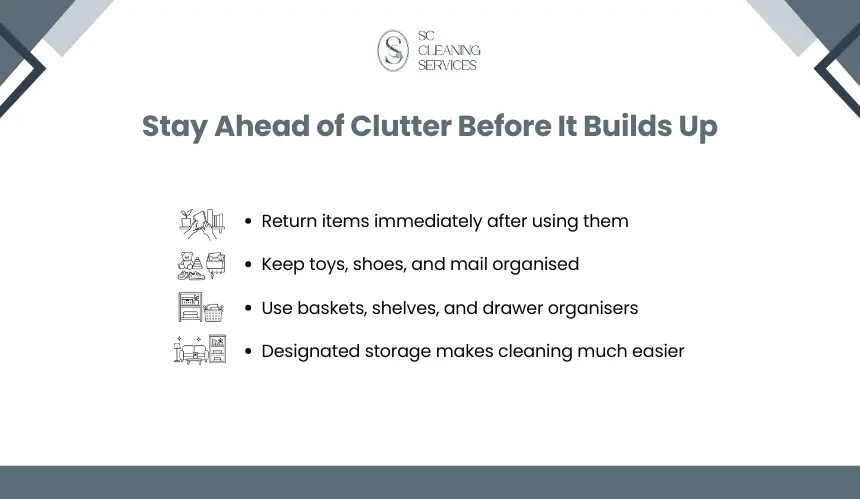
Clutter can make even a clean home feel untidy and disorganized. For busy families, keeping belongings under control is often just as important as regular cleaning. Preventing clutter from accumulating saves time and makes routine cleaning much easier to manage.
Developing simple organizational habits also helps maintain a more functional living space. When everything has a designated place, it becomes easier to keep rooms tidy throughout the day without spending extra time searching for misplaced items.
Organize items as you finish using them
One of the easiest ways to prevent clutter is to return items to their proper place as soon as they are no longer needed. Putting away shoes, backpacks, toys, mail, and kitchen items immediately helps keep surfaces clear and reduces the amount of tidying required later.
This habit only takes a few moments but can significantly reduce the amount of clutter that builds up over the course of a busy day. Small actions completed consistently often have the greatest long-term impact.
Use simple storage solutions to stay organized
Storage baskets, shelves, drawer organizers, and labeled containers make it easier for every family member to know where items belong. Keeping commonly used belongings organized also reduces the likelihood of clutter spreading throughout the home.
Choosing storage solutions that fit the family’s daily routine encourages everyone to participate in keeping the house organized. A well-organized home is generally easier to clean and maintain, even during busy weeks.
Know When Professional Cleaning Can Help
Even with a well-planned cleaning routine, there are times when household responsibilities become difficult to manage. Busy work schedules, family commitments, holidays, or special occasions can leave very little time for thorough cleaning. Recognizing when extra help is needed allows families to maintain a clean home without adding unnecessary stress to their routine.
Professional cleaning is not just for major cleanups. Many families use it as a practical way to stay on top of household maintenance while continuing to manage their everyday responsibilities.
Recognize when your schedule becomes too busy
If regular cleaning tasks are consistently being postponed or certain areas of the home are no longer receiving enough attention, it may be a sign that additional help would be beneficial. A growing list of unfinished chores can quickly become overwhelming and make it more difficult to restore the home to a comfortable condition.
Seeking professional assistance during particularly busy periods helps prevent cleaning tasks from accumulating. It also allows families to spend more time focusing on work, school, and personal activities instead of trying to catch up on household chores.
Choose a cleaning plan that fits your family's routine
Every household has different cleaning needs, so selecting a service that matches the family’s schedule can make ongoing maintenance much easier. Some families benefit from regular weekly visits, while others prefer occasional deep cleaning or seasonal services based on their lifestyle.
Choosing a plan that complements existing routines helps maintain a consistently clean home without disrupting daily activities. A flexible approach allows families to receive the level of support they need while keeping household responsibilities manageable.
Frequently Asked Questions
How often should high-traffic areas be cleaned?
Areas such as kitchens, entryways, living rooms, and frequently used bathrooms benefit from daily attention because they collect dirt and clutter more quickly than other parts of the home. Regular maintenance helps prevent larger cleaning jobs later.
What is the easiest way to make weekly cleaning feel less overwhelming?
Dividing deep cleaning tasks between different areas of the home throughout the week keeps the workload manageable. Rotating responsibilities prevents one day from becoming overloaded with household chores.
How can children help with household cleaning?
Children can assist by putting away toys, organizing personal belongings, making their beds, placing dirty clothes in laundry baskets, and helping clear tables after meals. Assigning simple age-appropriate tasks encourages responsibility while reducing the overall workload.
Why is controlling clutter just as important as cleaning?
Clutter makes surfaces harder to clean and can make a home appear untidy even after it has been cleaned. Keeping belongings organized allows daily cleaning to be completed more efficiently and helps maintain a more comfortable living environment.
When should a family consider professional home cleaning?
Professional cleaning can be helpful when work schedules, family activities, or other responsibilities make it difficult to maintain regular household cleaning. It can also provide extra support before holidays, special events, or after particularly busy periods.